
What to Ask Your Doctor After a Week of High BP Readings
A week of high blood pressure readings is easier to discuss when you bring the right log, medication details, and questions about targets, treatment, side effects, and follow-up.
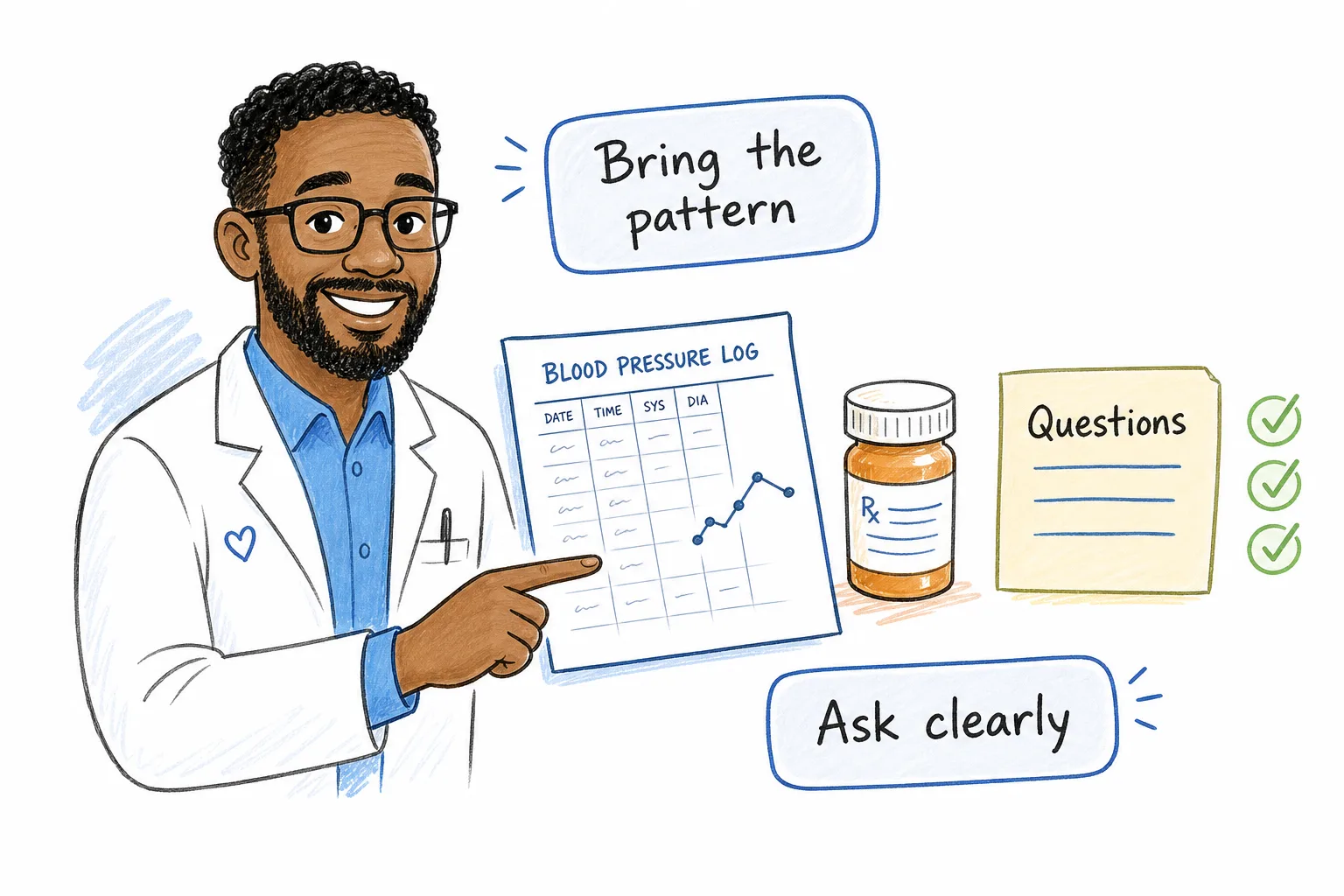
- ✓Bring recent BP readings with dates, times, symptoms, medication timing, and current medication packs.
- ✓Ask what range you are aiming for and whether your pattern needs treatment changes.
- ✓Discuss side effects, refill gaps, substitutions, and other medicines you use.
- ✓Leave with a clear plan for monitoring, follow-up, tests, and when to seek urgent care.
A blood pressure appointment goes better when you bring the pattern
A blood pressure appointment can feel short, especially when the clinic is busy and you have waited a long time to be seen. You may arrive with three concerns in your mind, then forget two once the consultation starts. You may leave with a new prescription but no clear answer on your target, side effects, or follow-up.
Preparation helps because hypertension care is bigger than one clinic reading. Your doctor is usually thinking about your average readings, age, symptoms, medication history, kidney function, heart and stroke risk, diabetes, pregnancy plans if relevant, and whether the treatment is something you can take consistently. Famasi's broader guide to checking, tracking, and managing high blood pressure in Nigeria explains how those pieces fit together outside the appointment.
In Nigeria, that preparation matters even more because care often happens across different places. You may check BP at home, at a pharmacy, after a health outreach, at work, or in a hospital clinic. You may refill from one pharmacy this month and another next month. Your doctor will not see every reading, medication pack, or brand substitution unless you bring the information. If home checks are part of that picture, make sure you know how to check blood pressure correctly at home before judging the pattern.
WHO notes that fewer than 50% of adults with hypertension are diagnosed and treated globally, and only about 1 in 5 have it controlled. The goal of the visit is simple: leave knowing what your numbers mean, what your treatment is doing, what to monitor, and when to seek help.
Before the appointment: organise the evidence
Bring anything that helps your doctor see the full picture quickly. A one-page note is better than trying to remember everything while someone is waiting for the next patient.
Bring readings, medicines, and recent results
Pack or write down:
* Recent blood pressure readings, with dates and times * Pulse readings, if your monitor shows pulse * The arm you used, especially if one arm usually reads higher * Current medication packs, because names are easy to mix up * Your prescription or a clear photo of it * Any medicine you stopped, missed, or changed recently * Side effects you have noticed * Other medicines you use, including diabetes medicines, cholesterol medicines, painkillers, cold and flu medicines, supplements, eye drops, and hormonal contraception * Recent lab results, scan reports, ECG results, discharge summaries, or referral letters * Notes on pregnancy, breastfeeding, trying to conceive, diabetes, kidney disease, stroke, heart disease, asthma, gout, ulcers, or other conditions if they apply
If you use a home monitor, bring the machine if possible, especially if your home readings and clinic readings are very different. A doctor, nurse, or pharmacist can compare it with a clinic device and check whether your cuff size and technique are reasonable. A clear blood pressure log also helps them separate a repeated pattern from one unusual reading.
Choose the main job for the visit
Pick one or two goals before you enter the room. For example: "I want to understand my target," "I want to discuss ankle swelling since starting amlodipine," or "I want to know whether these morning readings need a medication change."
If someone else helps with medication, such as a child, spouse, sibling, or caregiver, consider going with them or sending them a photo of the final plan after the appointment. Blood pressure treatment works better when the person buying refills or setting reminders understands what changed.
During the appointment: ask until the plan is clear
Start with the numbers, then move to risk, monitoring, and daily life. You do not need to pretend you understand everything. Ask direct questions until the plan makes sense.
Confirm what your readings mean
Ask:
* "What is my blood pressure today?" * "Is this reading normal, high, very high, or an emergency level?" * "What blood pressure range are we aiming for in my case?" * "Should I be checking at home, and how often?" * "Do my home readings match what you are seeing in the clinic?" * "Could stress, pain, exercise, caffeine, poor sleep, or measurement technique be affecting my readings?" * "Should I check both arms, or should I keep using one arm?" * "At what number should I call the clinic, and at what number should I seek urgent care?"
One clinic reading may not tell the whole story. Some people have higher readings in the clinic because they are anxious, rushed, in pain, or have just climbed stairs. Some people have normal clinic readings but higher readings at home or work. Your doctor may use home blood pressure monitoring or ambulatory blood pressure monitoring to confirm the pattern. If you are worried because of one sudden spike, read what to do after one high blood pressure reading before turning it into a medication decision.
If you already have a log, show the pattern instead of only the highest number. "My morning readings for the last two weeks are mostly around 146/92, but evenings are around 132/84" is more useful than "It reached 170 one day." When that morning-versus-evening difference keeps repeating, bring it up directly and ask whether your blood pressure pattern changes by time of day.
Also ask whether your technique is sound. Sit quietly for about five minutes. Keep your back supported, feet flat, arm supported at heart level, and cuff on bare skin. Avoid measuring immediately after exercise, smoking, caffeine, a stressful call, or rushing around. Poor technique can make numbers look scarier or calmer than they really are.
Ask about tests and personal risk
High blood pressure affects more than the number on the cuff. Over time, uncontrolled blood pressure can strain blood vessels and organs, including the heart, brain, kidneys, and eyes.
Ask:
* "Do I need blood tests for kidney function and electrolytes?" * "Should I do a urine test for protein or albumin?" * "Do I need a cholesterol test or blood sugar/HbA1c test?" * "Do I need an ECG?" * "How does my blood pressure affect my risk of stroke, heart attack, heart failure, kidney disease, or eye problems?" * "Do I have signs of organ damage, or are we checking to prevent it?" * "How often should these tests be repeated?"
Common blood pressure-related checks may include serum creatinine or estimated glomerular filtration rate (eGFR), sodium and potassium, urine albumin-to-creatinine ratio, fasting glucose or HbA1c, cholesterol/lipid profile, and ECG. Your doctor may request more or fewer tests depending on your history, symptoms, age, medications, and what is available.
If you have diabetes, kidney disease, heart disease, stroke history, chest pain, pregnancy, breastfeeding, or pregnancy plans, say so clearly. These details can change your target, medication choice, and follow-up.
Some blood pressure medicines are generally avoided in pregnancy, including ACE inhibitors and ARBs, because they can harm the baby. High blood pressure in pregnancy needs careful monitoring. Seek urgent care if you are pregnant and have severe headache, visual changes, chest pain, shortness of breath, severe upper abdominal pain, sudden swelling, weakness, confusion, or very high readings.
Make lifestyle advice specific
Lifestyle advice is hard to use when it stops at "eat healthy and exercise." Ask your doctor to make it practical.
Ask:
* "Which lifestyle change would make the biggest difference for me first?" * "How much salt should I aim for, and what local foods should I watch?" * "What level of exercise is safe for me?" * "Should I reduce alcohol, stop smoking, or check my weight more often?" * "Are there painkillers or cold medicines that may raise my blood pressure?" * "How should I manage blood pressure during fasting, illness, vomiting, diarrhoea, or heat?"
For many people in Nigeria, salt comes from more than the salt added at the table. It may come from seasoning cubes, salty soups, processed meats, instant noodles, snacks, or restaurant meals.
Also ask what not to do. Do not add extra tablets, double doses, potassium supplements, "electrolyte" drinks, or strong painkillers because someone said they helped. Do not share your medicine with a relative. Do not stop your medicine because your reading is normal unless your doctor has given you a supervised plan; a normal reading can simply mean your blood pressure medication is working.
If medication changes: leave with exact instructions
If your doctor starts a new blood pressure medicine or changes your dose, do not leave with only the tablet name. Leave with the reason for the change, the exact instructions, and the next review plan.
Confirm the medicine, dose, and substitution rules
Ask:
* "What is the name of this medicine and what is the active ingredient?" * "What strength am I taking?" * "How many times a day should I take it?" * "Should I take it in the morning, evening, with food, or without food?" * "Is this replacing one of my medicines or adding to it?" * "Which medicine should I stop, if any?" * "How long should I take this before we know if it is working?" * "What should I do if I miss a dose?" * "Should I avoid any painkillers, cold medicines, supplements, or other drugs while taking this?" * "If the pharmacy does not have this brand, what substitutions are acceptable?"
That last question matters. In many Nigerian pharmacies, your exact brand may not always be available. A substitution may be fine if it has the same active ingredient, same strength, and same release type, but every "BP drug" is not interchangeable. Amlodipine 5 mg is not the same as amlodipine/valsartan 5/160 mg. Losartan is not the same as lisinopril. A once-daily medicine may not be the same as a twice-daily medicine.
If your doctor writes a combination tablet, ask what ingredients are inside it. Combination medicines can reduce pill burden, but they can also create confusion if someone later adds one of the same ingredients separately. Take a clear photo of the prescription before you leave.
Ask about side effects before they happen
Side effects are one of the main reasons people stop blood pressure medication quietly. The safer approach is to know what is expected, what is manageable, and what is urgent.
Ask:
* "What side effects are common with this medicine?" * "Which side effects should I report quickly?" * "Which symptoms mean I should seek urgent care?" * "Can this medicine cause dizziness, cough, ankle swelling, frequent urination, tiredness, sexual problems, or changes in potassium or kidney function?" * "If I feel unwell, should I keep taking it while I call, or should I stop immediately?" * "Are there side effects that may reduce after a few days or weeks?" * "Can the timing of the dose be changed if it affects my day?"
Amlodipine and some other calcium channel blockers can cause ankle swelling, headache, flushing, or dizziness. ACE inhibitors such as lisinopril or enalapril can cause a dry cough and, rarely, swelling of the lips, tongue, face, or throat. ARBs such as losartan or telmisartan are less likely to cause cough but can affect kidney function or potassium. Diuretics can increase urination and affect electrolytes. Beta-blockers can slow the heart rate and may cause tiredness or worsen wheezing in some people. Famasi's side-effect guide explains what to do when blood pressure medication side effects appear between appointments.
Do not stop blood pressure medicine on your own just because a side effect appears, unless you have been told that a specific symptom means you should stop and seek urgent help. Sudden stopping can be risky with some medicines, and uncontrolled blood pressure may not cause symptoms until damage is already happening.
Before you leave, ask for the best contact route if side effects happen: clinic phone line, follow-up appointment, pharmacist, or emergency care depending on severity.
After the appointment: turn the prescription into a routine
A blood pressure visit should end with the next step. If the plan is unclear, ask before you leave or follow up with a qualified pharmacist as soon as possible.
Write down the follow-up plan
Ask:
* "When should I come back?" * "Should I send readings before then?" * "How many readings should I record each week?" * "What target are we using before the next visit?" * "If my readings remain high after starting this medicine, what should I do?" * "If my readings become too low or I feel dizzy, what should I do?" * "Do I need blood tests before the next appointment?" * "Who should I contact if I cannot get my refill?"
Follow-up timing depends on your situation. WHO guidance suggests monthly follow-up after starting or changing blood pressure medication until you reach target, then every 3 to 6 months once blood pressure is controlled. Your doctor may want to see you sooner if readings are very high, symptoms appear, you are pregnant, you have diabetes or kidney disease, you have had a stroke or heart problem, or your medication needs close monitoring.
If your appointment is far away and your readings are still high, do not wait silently for months. Use the contact route your clinic gave you, speak to a qualified pharmacist, or seek urgent care if symptoms appear. If someone else manages the routine for you, share the plan with them so they can help with refills, logs, and reminders; the same structure applies when a caregiver is helping a parent manage blood pressure medication remotely.
Use the pharmacist for the practical checks
Your pharmacist can help turn the prescription into a safe daily routine. This is especially useful for refills, brand changes, reminders, and side effects between doctor visits.
Ask your pharmacist:
* "Can you confirm the active ingredient and strength?" * "Is this the same as what my doctor prescribed?" * "Is this a brand change or a medication change?" * "How should I take it?" * "What should I do if I miss a dose?" * "What side effects should I watch for?" * "Does this interact with my other medicines?" * "When should I refill so I do not run out?"
If you receive a substitution, ask the pharmacist to explain it in plain language. "Same active ingredient, same strength, same dosing" is different from "similar medicine." If the active ingredient or dose is different from the prescription, the pharmacist may need to contact the prescriber or advise you to return to the clinic. When the exact brand is unavailable, use this guide on what to do if your blood pressure medicine is out of stock.
Famasi Care Specialists can support the practical side of your blood pressure plan. Remi can help you keep a medication list, organise your questions before appointments, track refill timing, and note side effects or readings you need to discuss. This support does not replace your doctor's clinical decisions, but it helps you arrive prepared and follow the plan consistently.
Summary: What to Take Away From This Guide
* Prepare for a blood pressure appointment with readings, medication packs, prescriptions, side-effect notes, and recent test results. * Ask what your numbers mean, what target you are aiming for, and when a reading should trigger urgent care. * If medication is started or changed, confirm the active ingredient, strength, dose timing, what it replaces, and what to do if you miss a dose. * Ask about side effects before they happen, especially dizziness, ankle swelling, cough, frequent urination, swelling of the face or throat, and symptoms that need urgent care. * Kidney function, electrolytes, urine protein, cholesterol, blood sugar, and ECG checks may be part of safe hypertension care. * If you have diabetes, kidney disease, heart disease, stroke history, pregnancy, breastfeeding, or pregnancy plans, say so clearly because it can change your plan. * Follow-up is part of treatment. Do not leave without knowing when to return or what to monitor. * Your pharmacist and Famasi Care Specialists can help you understand prescriptions, manage refills, track questions, and stay consistent between doctor visits.
Common Questions About Asking Your Doctor About High BP Readings
How many high BP readings should I bring to my doctor?
What should I ask if my doctor changes my BP medication?
Should I bring my BP monitor to the appointment?
Can a pharmacist help before I see the doctor?
When should I not wait for the appointment?
Just for you
References
- NICE. Hypertension in adults: diagnosis and management.
- World Health Organization. Hypertension fact sheet.
- World Health Organization. Guideline for the pharmacological treatment of hypertension in adults.
- American Heart Association. Monitoring your blood pressure at home.
- American Heart Association. Managing High Blood Pressure Medications.
- American College of Cardiology/American Heart Association. 2025 Guideline for the Prevention, Detection, Evaluation, and Management of High Blood Pressure in Adults.
- NICE. Hypertension in pregnancy: diagnosis and management.
- Centers for Disease Control and Prevention. Measure Your Blood Pressure.