
How to Check, Track and Manage High Blood Pressure in Nigeria
A practical Nigerian guide to understanding blood pressure numbers, checking correctly at home, spotting patterns, taking medication safely, and keeping refills consistent.
- ✓Blood pressure decisions should be based on patterns, not one isolated reading.
- ✓Correct technique at home makes readings more useful for clinicians.
- ✓Medication works best when refills, timing, and follow-up are consistent.
- ✓Famasi can help families keep blood pressure medication routines on track.
What Your Blood Pressure Numbers Actually Mean
Your blood pressure reading has two numbers:
Systolic (the top number): The pressure in your arteries when your heart beats. Diastolic (the bottom number): The pressure in your arteries when your heart rests between beats.
So when someone says "120 over 80," the 120 is systolic and 80 is diastolic.
What the ranges mean
According to both the American Heart Association and the Nigerian Cardiac Society, here is how readings are generally classified:
- Normal: Below 120/80
- Elevated: 120–129 systolic, less than 80 diastolic
- Stage 1 hypertension: 130–139 systolic OR 80–89 diastolic
- Stage 2 hypertension: 140 or higher systolic OR 90 or higher diastolic
- Hypertensive crisis: 180 or higher systolic AND/OR 120 or higher diastolic — seek immediate medical attention
What about home readings?
Home readings tend to be slightly different from clinic readings. A 2024 study from the Nigerian Institute of Medical Research found that home blood pressure monitoring among Nigerian adults is feasible and correlates well with clinic readings, but morning readings are typically slightly higher than evening readings. If your numbers shift across the day, read why your BP reading changes between morning and night. The key isn't one reading but the pattern over time.
For a step-by-step guide to getting reliable numbers, see how to check your blood pressure correctly at home. Once you're checking properly, keep a blood pressure log your doctor can actually use.
What is a normal blood pressure by age in Nigeria?
There's no separate "normal by age" chart for Nigerians specifically. The standard ranges above apply to adults of all ages. What changes with age isn't the normal range but the likelihood of having high blood pressure — the prevalence in Nigeria increases significantly after age 40, with some studies reporting rates above 40% in urban populations over 45.
Common reading questions
I got 155/95. Should I panic? Take a breath. One high reading doesn't tell the whole story. It could be affected by stress, poor sleep, coffee, movement, or even how you were sitting. Rest properly for 5–10 minutes, then check again. If it stays high after several checks at different times, speak with a clinician. If you're dealing with one surprising number and aren't sure what to do next, read One High Blood Pressure Reading — What Should I Do?.
I got 120/90. Is that normal? The systolic number is fine, but the diastolic (90) is in Stage 1 hypertension range. This is worth monitoring. Check a few times over the next week and share the readings with your doctor.
My readings are different every time I check. Why? Blood pressure changes throughout the day based on what you eat, how you slept, whether you're stressed, and many other factors. This is normal. The goal is to look for a pattern, not identical numbers.
How to Check Your Blood Pressure at Home in Nigeria Properly
A reading is only useful if you can trust how it was taken. Many people get misleading numbers because of small mistakes in the measurement process.
What you need
An upper-arm blood pressure monitor. Upper-arm monitors are more reliable than wrist monitors. In Nigeria, validated brands like Omron, Microlife, and A&D are widely available in pharmacies and online stores. Look for a device that fits your arm circumference — standard cuffs fit arms 22–32 cm, but larger and smaller sizes are available.
The correct measurement routine
- Rest first. Sit quietly for 5 minutes before checking. Don't check immediately after rushing, climbing stairs, or feeling stressed.
- Sit properly. Keep your back supported, feet flat on the floor, and legs uncrossed.
- Position your arm. Rest your arm on a table or armrest so the cuff is at heart level. Your arm should be supported, not hanging.
- Use the right cuff size. A cuff that's too small can make your reading appear higher than it really is. The cuff should go around your bare upper arm (not over clothing), about 2–3 cm above your elbow.
- Stay quiet. Don't talk, laugh, or move while the machine is reading.
- Take two readings. Wait 1–2 minutes between them and record both. The average is more useful than either number alone.
What NOT to do before checking
- Don't drink caffeine, smoke, or exercise for 30 minutes before checking
- Don't check with a full bladder — this can raise readings by 10–15 mmHg
- Don't check immediately after a heavy meal
- Don't take a single reading and make a conclusion
How often should you check?
If you're monitoring a new or changing condition, check twice daily — once in the morning (before medication, after emptying your bladder) and once in the evening. Record the date, time, and reading each time. If your blood pressure is well-controlled, checking once or twice a week is usually enough. Your doctor will give you a schedule that fits your situation.
Common mistakes Nigerian patients make
- Checking over clothing. A reading taken over a sleeve can be off by 5–50 mmHg. Always use bare skin.
- Crossing legs while checking. This can raise your reading by 2–8 mmHg.
- Talking during measurement. Even casual conversation can add 5–10 mmHg to your reading.
- Using a cuff that doesn't fit. Many people use the standard cuff that came with the device even when their arm circumference requires a larger or smaller size.
- Trusting the first reading. Always take at least two readings. The first is often higher due to the "alerting reaction."
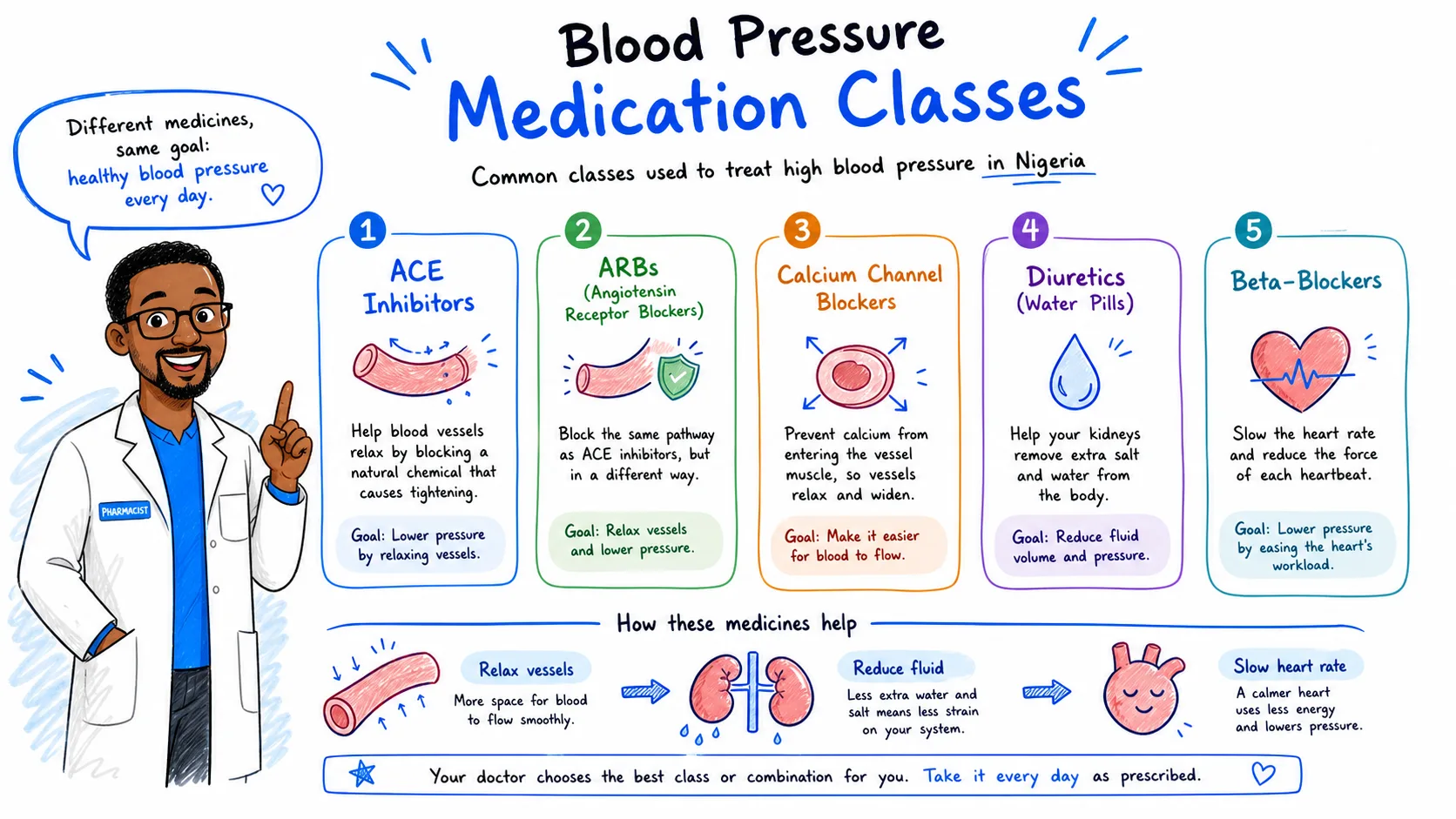
Blood Pressure Medications Available in Nigeria
If lifestyle changes alone don't bring your blood pressure under control, medication is usually the next step. Several classes of blood pressure medications are commonly prescribed in Nigeria.
ACE Inhibitors
- How they work: These block the production of a hormone that narrows blood vessels, helping your vessels relax.
- Common brands in Nigeria: Lisinopril (Zestril, Prinivil), Ramipril (Altace), Enalapril (Vasotec), Captopril (Capoten)
- Common side effects: Dry cough (most common — affects about 10–20% of users), dizziness, headache, elevated potassium levels
- Note: If you develop a persistent dry cough, speak with your doctor rather than stopping the medication. They may switch you to an ARB (see below), which works similarly but rarely causes cough.
ARBs (Angiotensin Receptor Blockers)
- How they work: Similar to ACE inhibitors, but they block the hormone at a different point in the process. They rarely cause cough.
- Common brands in Nigeria: Losartan (Cozaar), Valsartan (Diovan), Telmisartan (Micardis), Irbesartan (Avapro)
- Common side effects: Dizziness, headache, fatigue. Generally well-tolerated.
Calcium Channel Blockers
- How they work: These relax the muscles of your blood vessels, making it easier for blood to flow through.
- Common brands in Nigeria: Amlodipine (Norvasc), Nifedipine (Adalat), Verapamil
- Common side effects: Swelling in the ankles and feet (especially with amlodipine), headache, dizziness, constipation (more common with verapamil)
- Note: Ankle swelling from amlodipine is common but not harmful. If it bothers you, your doctor may adjust the dose or add another medication.
Diuretics (Water Pills)
- How they work: These help your kidneys remove excess sodium and water from your body, reducing the volume of blood your heart has to pump.
- Common brands in Nigeria: Hydrochlorothiazide (HCTZ), Furosemide (Lasix), Spironolactone (Aldactone)
- Common side effects: Frequent urination, electrolyte imbalances, dizziness, increased thirst
- Note: Doctors typically recommend taking diuretics in the morning so frequent urination doesn't interfere with sleep.
Beta-Blockers
- How they work: These slow your heart rate and reduce the force of your heart's contractions.
- Common brands in Nigeria: Bisoprolol, Metoprolol, Atenolol, Propranolol (Inderal)
- Common side effects: Fatigue, cold hands and feet, slow heart rate, erectile dysfunction, sleep disturbances
- Note: Propranolol and metoprolol are widely available and affordable in Nigeria. Beta-blockers are often prescribed for people who also have heart conditions or anxiety alongside hypertension.
Combination Medications
- How they work: They combine two or more blood pressure medicines from different classes in one pill.
- Common examples in Nigeria: Amlodipine/losartan and hydrochlorothiazide/lisinopril.
- Routine benefit: They can simplify your routine by reducing the number of pills you take each day.
- Note: Your doctor decides whether a combination pill is appropriate based on your readings, other conditions, side effects, and current medication list.
How much do BP medications cost in Nigeria?
Prices vary by brand, pharmacy, and location. As a rough 28- to 30-tablet guide:
- Amlodipine 10mg: about ₦350 – ₦3,250 for common generic options. Branded Norvasc can cost about ₦28,900 – ₦39,350.
- Lisinopril 10mg: about ₦300 – ₦3,500
- Losartan 50mg: about ₦1,100 – ₦8,750
- Bisoprolol 5mg: about ₦2,700 – ₦3,600
Generic versions are generally more affordable. Prices may be higher in remote areas. Some health insurance plans (HMOs) cover a portion of chronic medication costs.
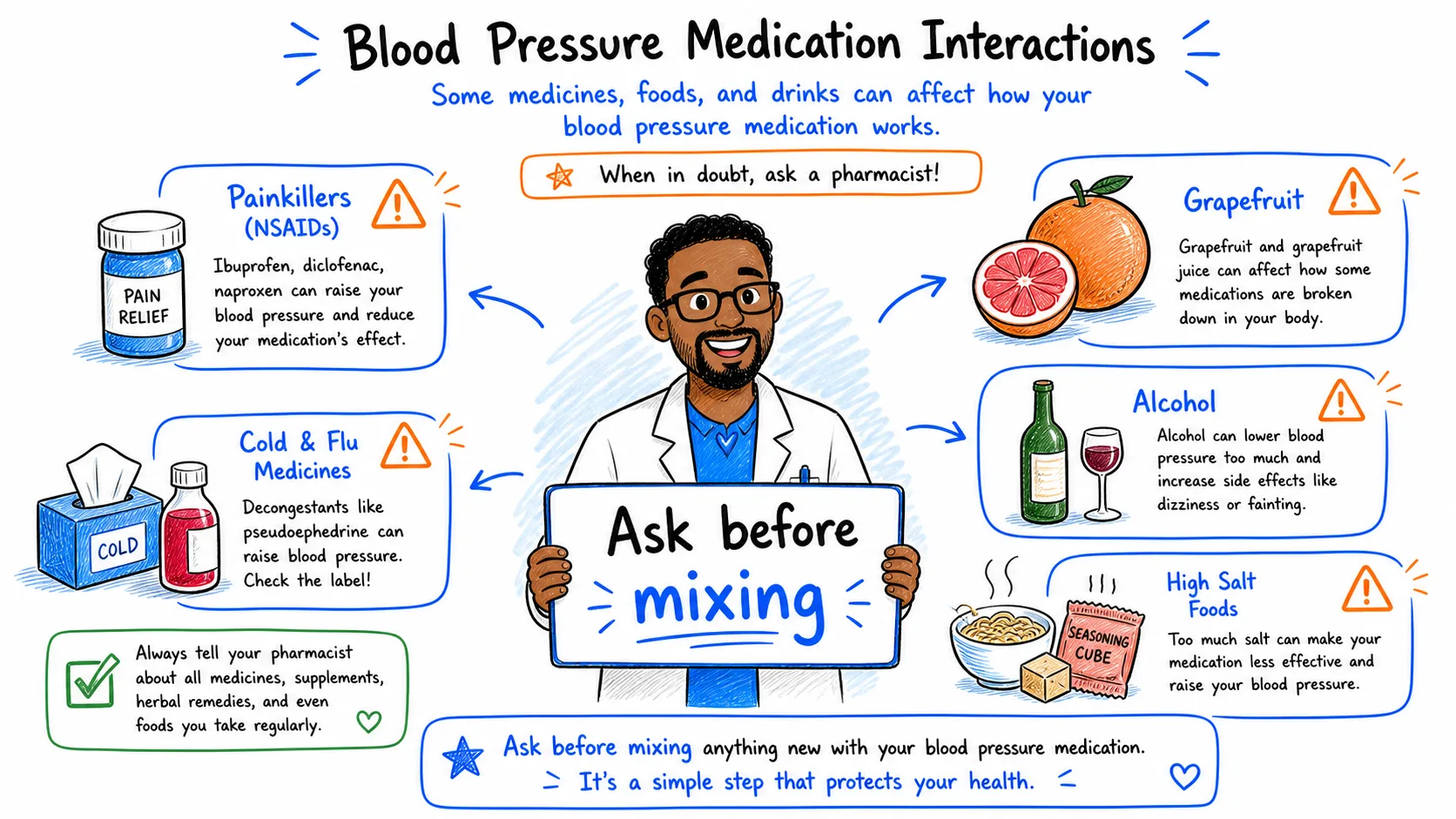
Drug Interactions — What Not to Take with Blood Pressure Medication
This is one of the most important — and least talked about — aspects of BP management. Many common medications, supplements, and even foods can interact with blood pressure drugs.
1. Common OTC interactions
- Painkillers (NSAIDs): Ibuprofen (Brufen, Nurofen), Diclofenac (Voltaren, Cataflam), and Naproxen can raise blood pressure and reduce the effectiveness of ACE inhibitors, ARBs, and diuretics. If you need pain relief while on BP medication, paracetamol (acetaminophen) is generally safer. Always ask a pharmacist before taking any painkiller.
- Cold and flu medications: Many contain decongestants like pseudoephedrine, which can raise blood pressure significantly. Check with a pharmacist before buying any cold remedy.
- Herbal supplements: Some supplements commonly available in Nigerian markets — including bitter kola, high-dose caffeine products, and certain traditional remedies — can interact with BP medications. Not all herbal products are regulated, and their effects on blood pressure aren't always studied. It's safest to inform your doctor or pharmacist about everything you take, including traditional medicines.
2. Food interactions
- Grapefruit and grapefruit juice: These can interfere with how your body processes certain BP medications, especially calcium channel blockers like amlodipine and nifedipine. You don't need to cut them out completely, but avoid consuming large amounts around the time you take your medication.
- High-sodium foods: This is the most common interaction. Many Nigerian staples — seasoning cubes, stockfish, dried fish, canned foods, and restaurant meals — can contain high levels of sodium. Sodium opposes the effect of most BP medications.
- Alcohol: Alcohol can affect how your BP medication works. Moderate consumption (one drink per day for women, two for men) is generally acceptable for most people, but heavy drinking can raise blood pressure and reduce the effectiveness of your medication.
3. When to ask a pharmacist
Ask a pharmacist before taking ANY new medication — including over-the-counter drugs — if you're on BP medication. This is especially important for painkillers, cold medications, antacids, weight loss supplements, and traditional/herbal remedies.
If a side effect is making you consider skipping or stopping your medicine, read what to do about blood pressure medication side effects before making a decision alone.
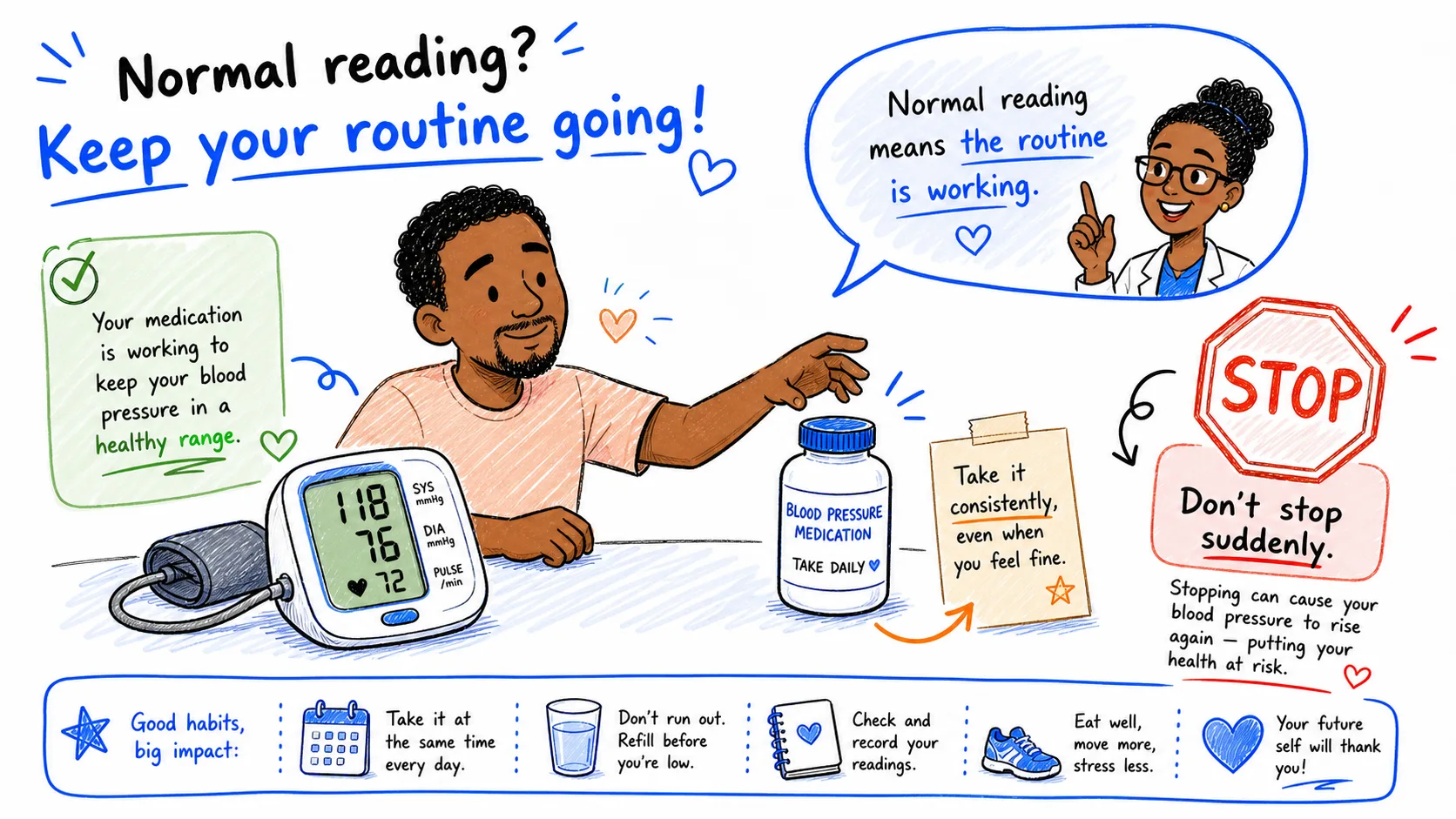
Can I Stop My Blood Pressure Medication If My Reading Is Normal?
This is probably the most common question Famasi Care Specialists hear from patients. The short answer: Don't stop your medication without speaking to your doctor first.
Why normal readings don't mean you're cured
Most high blood pressure has no single cure. What's happening is that your medication is doing its job — keeping your blood pressure in a healthy range. If you stop the medication, your blood pressure will likely return to its previous level over days or weeks. Studies from the Nigerian Hypertension Society show that many patients with chronic hypertension stop their medication once their readings improve, leading to rebound hypertension and an increased risk of stroke or heart attack.
Can your doctor reduce your medication?
Yes, sometimes. If you've made significant lifestyle changes — lost weight, improved your diet, started exercising regularly, reduced stress — your doctor may be able to lower your dose or reduce the number of medications you take. But this is a decision your doctor makes, not something you do on your own.
What about a single normal reading?
A single good reading doesn't mean you can stop. It means your routine is working. Continue taking your medication as prescribed and bring your reading log to your next appointment.
What happens if you stop suddenly
Stopping some BP medications abruptly — especially beta-blockers like bisoprolol and propranolol — can cause rebound hypertension (a sudden, dangerous rise in blood pressure), rapid heartbeat, and, in some cases, withdrawal symptoms. This isn't safe to do without medical supervision, and we break it down more fully here: Can I Stop Blood Pressure Medication If My Reading Is Normal?.
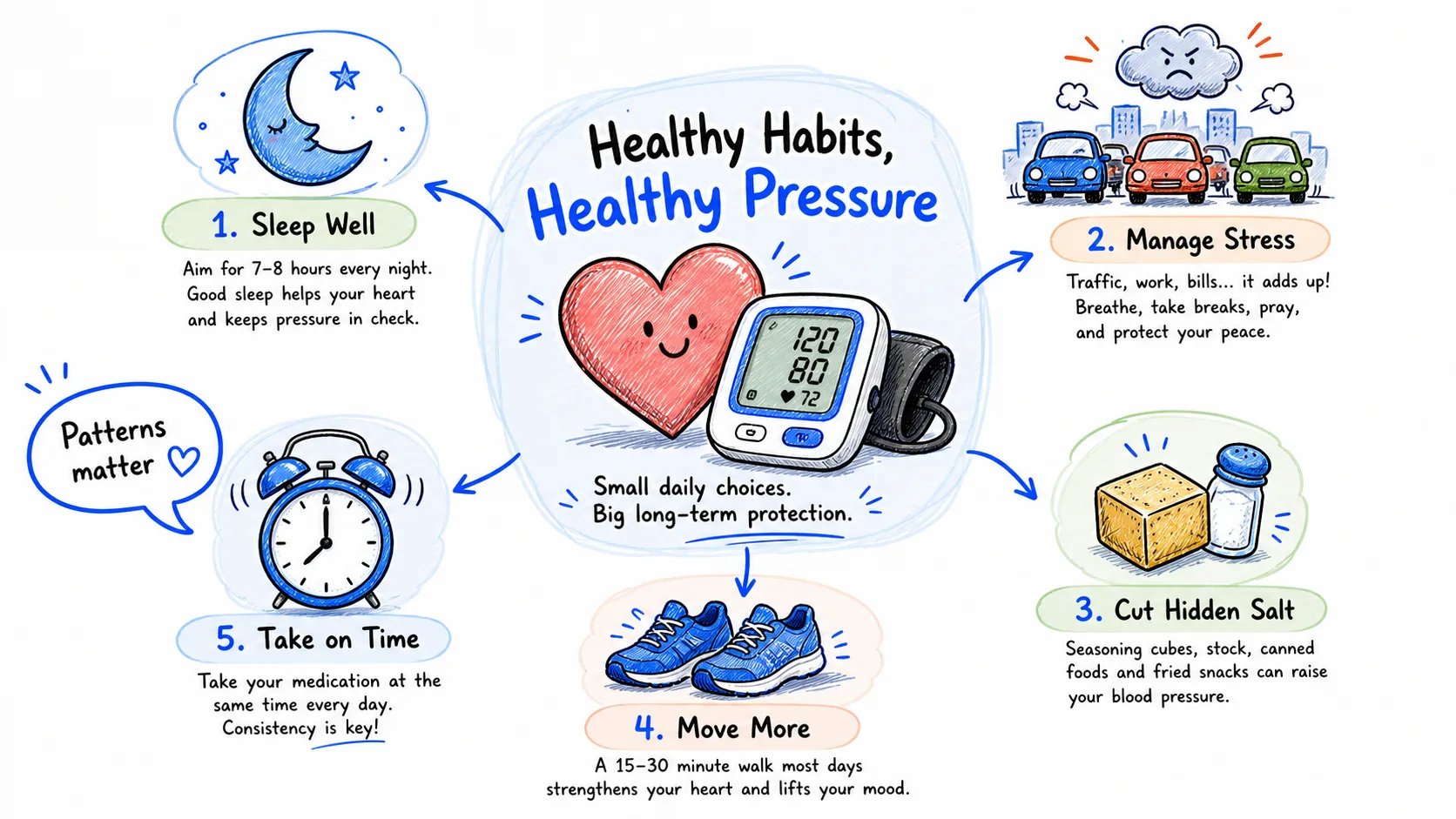
Blood Pressure, Stress, Sleep, and Daily Life
Blood pressure doesn't exist in a vacuum. It's affected by what you eat, how you sleep, how stressed you are, and how you navigate daily life in Lagos, Abuja, Port Harcourt, or wherever you live.
How stress affects blood pressure
When you're stressed, your body releases hormones that temporarily raise your blood pressure by narrowing your blood vessels and increasing your heart rate. This is normal in short bursts — the problem is when stress becomes chronic.
For many Nigerians, the sources of chronic stress are real: traffic, work pressure, caregiving responsibilities, financial strain, and the daily friction of navigating systems that don't always work. These don't go away with a deep-breathing exercise. What matters is recognizing that stress is part of your BP picture and building your management around that reality.
How poor sleep affects readings
Consistently sleeping less than seven hours per night is linked to higher blood pressure. Inadequate sleep affects the nervous system in ways that can keep blood pressure elevated the next day. If you're sleeping poorly and seeing high readings, address the sleep first — it may be the missing piece.
Caregiving and blood pressure
If you're managing medication for a parent, spouse, or other family member, you're carrying a significant load. Caregivers of people with chronic conditions report higher stress levels, more sleep disruption, and often neglect their own health. Checking your own blood pressure is part of the care plan — not separate from it.
Practical daily habits that help
- Reduce hidden sodium: Seasoning cubes, powdered broths, and processed foods are the biggest sources of hidden salt in most Nigerian diets. Try reducing cube use gradually — most dishes don't need as much as the recipe says.
- Move a little every day: Even a 15-minute walk most days has measurable effects on blood pressure. The goal isn't a gym membership; it's daily movement that fits your routine.
- Keep consistent timing: Take your medication at roughly the same time every day. Set a phone alarm or use a pill organizer.
- Track your readings in one place: A notebook, phone notes app, or the logbook that came with your monitor. Include date, time, reading, and any notes (slept poorly, stressed, took medication late).
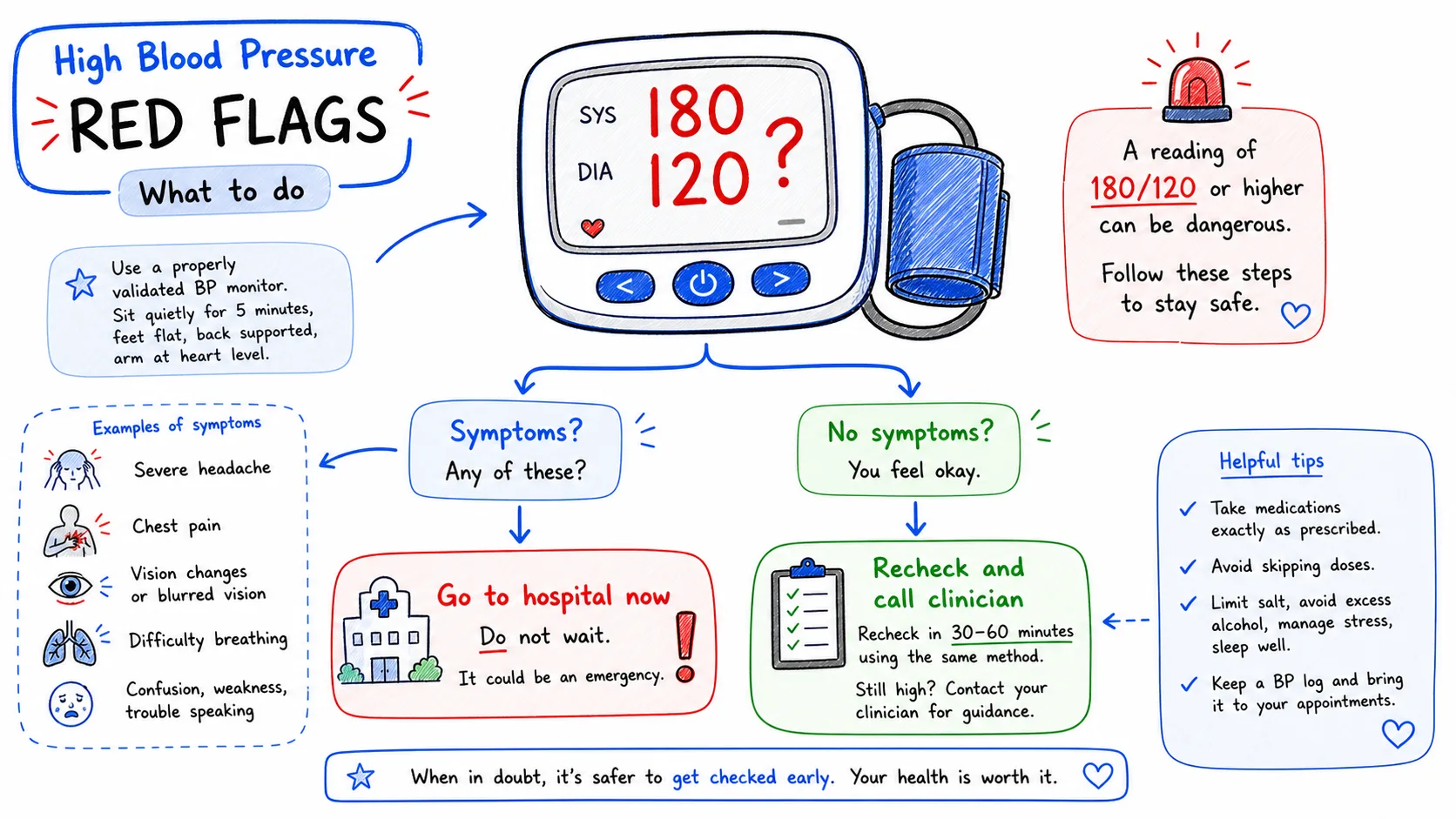
When to See a Doctor — Red Flags and Emergency Signs
Not every high reading is an emergency, but some situations require immediate medical attention.
| Situation | What to watch for | What to do |
|---|---|---|
| Go to the hospital now | Reading is 180/120 or higher with severe headache, chest pain, difficulty breathing, vision changes, confusion, weakness on one side of the body, or severe anxiety/agitation | Treat it as urgent and go to the nearest hospital immediately |
| See your doctor within a week | Readings stay in Stage 2 range (140/90 or higher) despite medication; side effects are bothering you; you started a new medication and aren't sure if it's working; you're considering stopping or changing medication | Book a clinician review and take your reading log and medication list with you |
| Recheck and monitor | One slightly high reading but you feel fine; readings vary between morning and evening; you recently changed exercise or diet; you're establishing a baseline | Rest, recheck properly, log the pattern, and escalate if readings stay high |
If your readings have stayed high for several days but you're not in an emergency, prepare for the appointment with what to ask your doctor after a week of high BP readings.
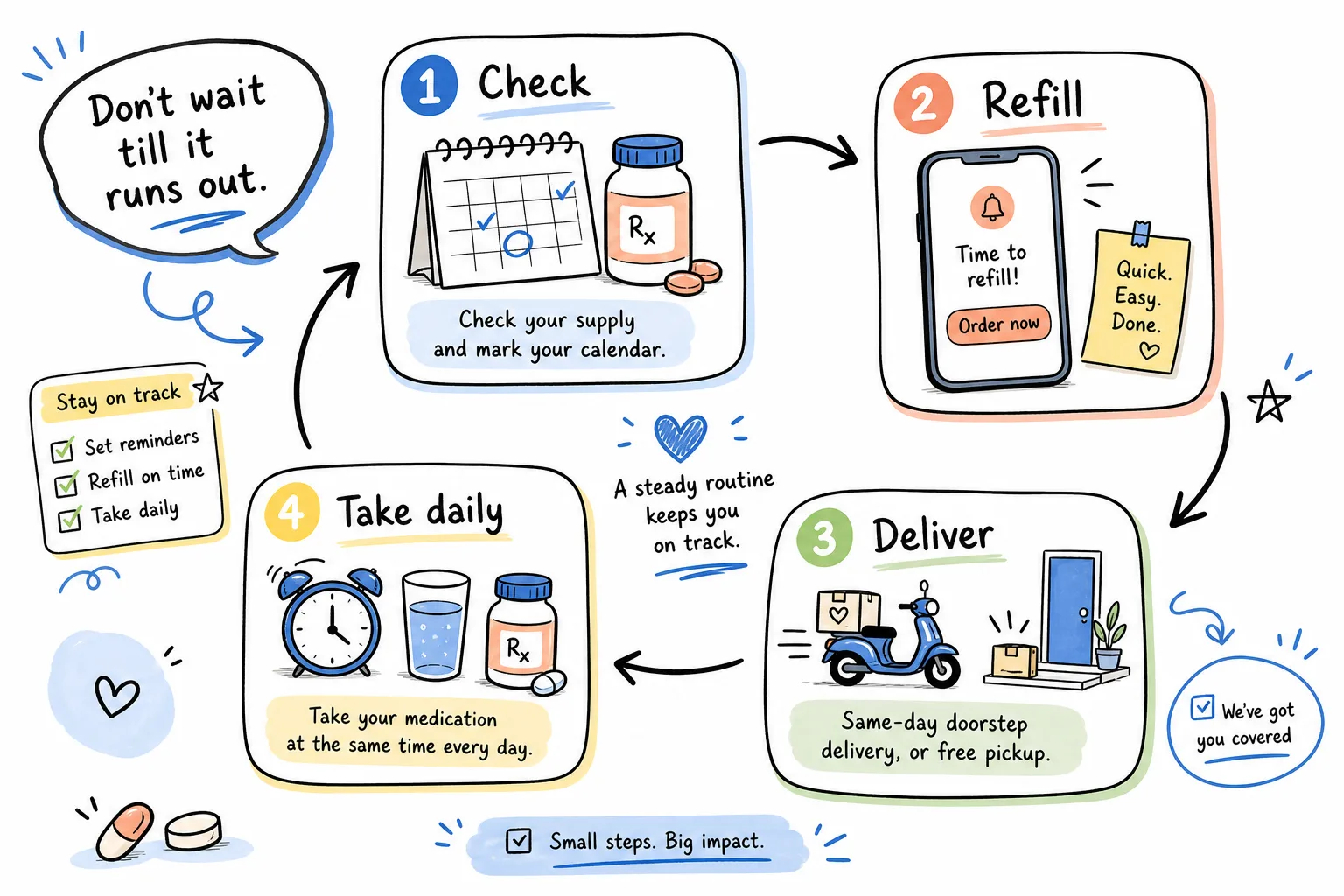
How to Keep Your BP Medication Routine Steady
The best treatment plan in the world doesn't work if you run out of medication. Medication continuity — taking your medication consistently, refilling on time, and never running out — is one of the most important factors in keeping blood pressure under control.
Common reasons people miss refills
- They wait until the bottle is almost empty before ordering
- They forget the exact date of the last refill
- The pharmacy doesn't have stock when they need it
- They can't get to the pharmacy during working hours
- They're ordering for someone else and coordination is complicated
A simple refill system
- Set a refill reminder for 5 days before your medication runs out — not the day it runs out. This gives you a buffer.
- Keep a list of your medications, dosages, and the name of the pharmacy you use. If you order online, keep the login details accessible.
- Order for someone else ahead of time. If you manage medication for a parent or partner, set their refill schedule alongside your own.
- Consider auto-refill. Some medication services let you set up recurring deliveries so the medication arrives before you run out. This removes the mental load of remembering.
For a fuller monthly system, read how to build a refill routine for blood pressure medication. But if your medicine is already unavailable, follow the step-by-step guide on what to do when your BP medication is out of stock.
What Famasi does
Famasi helps you find medication across a network of 1,000+ pharmacies in Nigeria, order it for delivery or pickup, and set up refill reminders so you never have to count tablets or make last-minute pharmacy runs. Famasi Care Specialists — licensed pharmacists — can answer questions about your medication routine and guide you through side effects, dose questions, or concerns about interactions. If you're unsure what support looks like in practice, here is how Famasi Care Specialists help with your blood pressure routine.
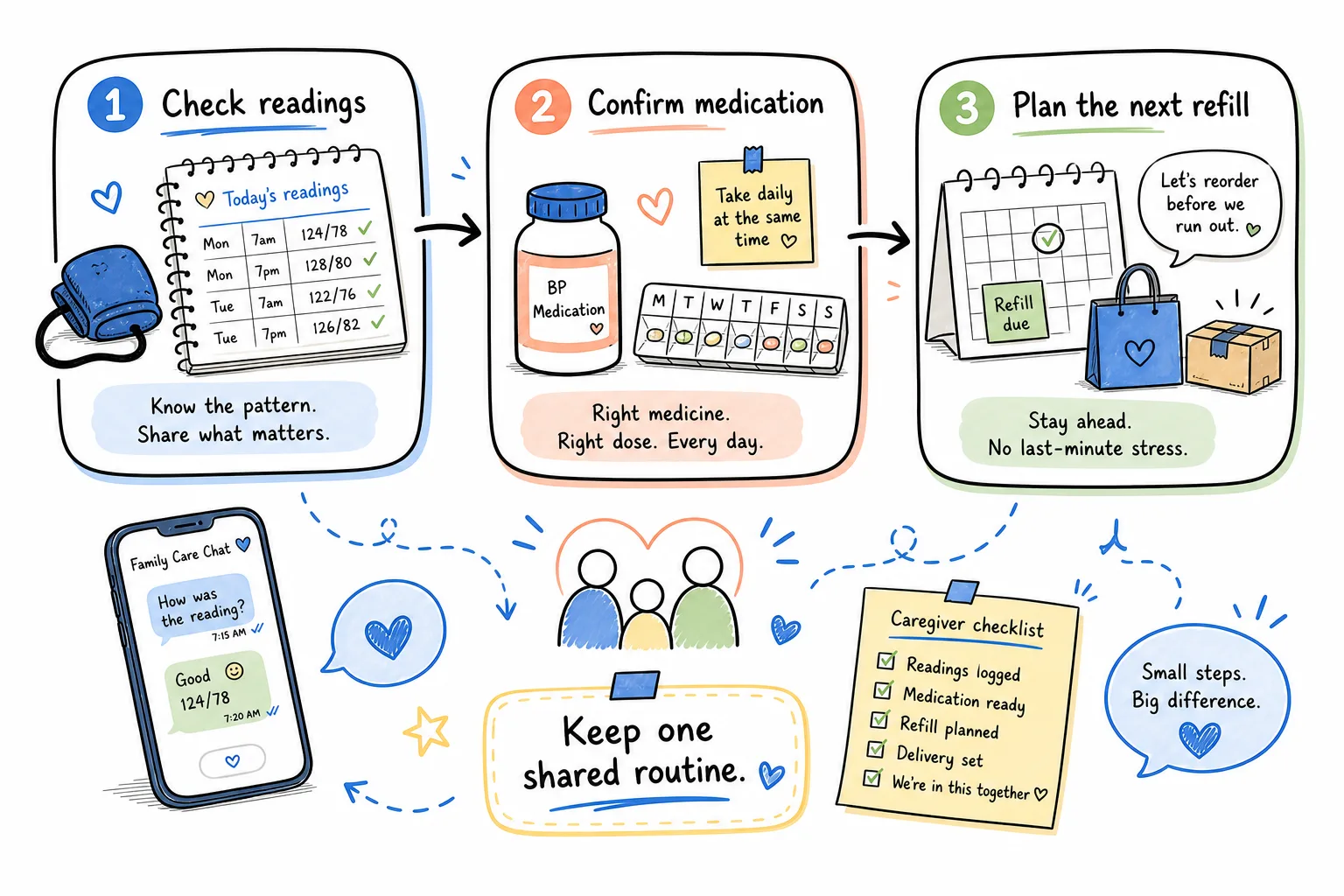
Managing BP Medication for a Loved One
If you're the person buying medication for a parent, partner, or elderly relative, you know the system is full of friction: guessing what they need, coordinating pharmacy visits, wondering whether they actually took their medication, and carrying the emotional weight when their numbers are off.
Tips for caregiver medication management
- Keep a shared log. Write down their readings, medication changes, and any symptoms they report. This makes doctor visits more productive.
- Use one pharmacy. Using the same pharmacy for all medications means the pharmacist has a complete picture of what they're taking and can flag potential interactions.
- Set up a delivery schedule. Order refills for the same time each month so it becomes a predictable routine rather than a scramble.
- Share access. If you're based in Lagos and your parents are in Ibadan or Kano, use a service that lets you order from anywhere and have the medication delivered to them directly.
If you manage medication for someone else, a predictable refill system can reduce last-minute stress. Start with this guide to building a monthly refill routine. But if you're coordinating care from another city, read how to manage blood pressure medication for a parent remotely.
Summary: What to Take Away From This Guide
- One reading isn't a diagnosis. Check properly, write it down, and look at the pattern.
- Measurement matters. Small mistakes in how you check can give you numbers you can't trust.
- Medication isn't forever in the sense you think. Many people need ongoing treatment, but your doctor can adjust it as your body changes.
- Drug interactions are real. Always ask a pharmacist before taking anything new with your BP medication.
- The routine is the treatment. Consistency — checking, taking medication, refilling on time — matters more than any single number.
- Caregivers are part of the plan. If you manage BP medication for someone else, your system matters as much as theirs.
Common Questions About Managing High Blood Pressure in Nigeria
What is considered high blood pressure?
Can I manage high blood pressure without medication?
How often should I check my BP at home?
When should high blood pressure become urgent?
Can Famasi help me manage my blood pressure routine?
References
- Nigerian Cardiac Society / Nigerian Hypertension Society. Guidelines for the management of hypertension in Nigeria. 2020.
- Odili AN, et al. Characteristics of self-measured home blood pressure in a Nigerian urban community: the NIPREGH study. Blood Pressure Monitoring. 2015;20(5):256-262.
- World Health Organization. Hypertension fact sheet.
- American Heart Association. Monitoring your blood pressure at home.
- Adeloye D, et al. Prevalence, awareness, treatment and control of hypertension in Nigeria: data from a nationwide survey 2017.
- Shimbo D, et al. The importance of out-of-office blood pressure monitoring in hypertension diagnosis and management. Hypertension Research. 2023.
- James PA, et al. 2014 evidence-based guideline for the management of high blood pressure in adults: report from the panel members appointed to the Eighth Joint National Committee (JNC 8).
- World Health Organization. Hypertension Nigeria 2023 country profile.
- World Health Organization Regional Office for Africa. Nigeria collaborates with WHO to curb hypertension, introduces control initiative.
- Ajisegiri WS, et al. Scaling up hypertension care in Nigeria: implementation research and policy considerations. 2024.