
Blood Pressure Medication Side Effects? What to Do Before You Stop
Side effects from blood pressure medication are a reason to speak up early, not stop treatment on your own. Learn what needs urgent help, what to report, and what to ask before changing anything.
- ✓Most blood pressure medication side effects can be managed with clinical advice.
- ✓Don't stop or change your dose because of side effects without speaking with a clinician.
- ✓Report ankle swelling, cough, dizziness, frequent urination, sexual side effects, or mood changes early.
- ✓Seek urgent help for face or throat swelling, fainting, chest pain, severe weakness, or breathing trouble.
First, decide how urgent the side effect is
Side effects are a reason to speak up early, not a reason to stop blood pressure medication on your own.
That distinction matters because high blood pressure often becomes dangerous quietly. You may feel better after stopping the tablet because your reading looks normal, or because the medicine made you dizzy or swollen, but your blood pressure can start rising again in the background.
Most side effects can be handled safely. Your doctor may reduce the dose, change the timing, request blood tests, switch the drug, or check whether the symptom is coming from something else. The risky move is making the change alone. For the wider routine around readings, refills, and follow-up, also read Famasi's guide to checking, tracking, and managing high blood pressure.
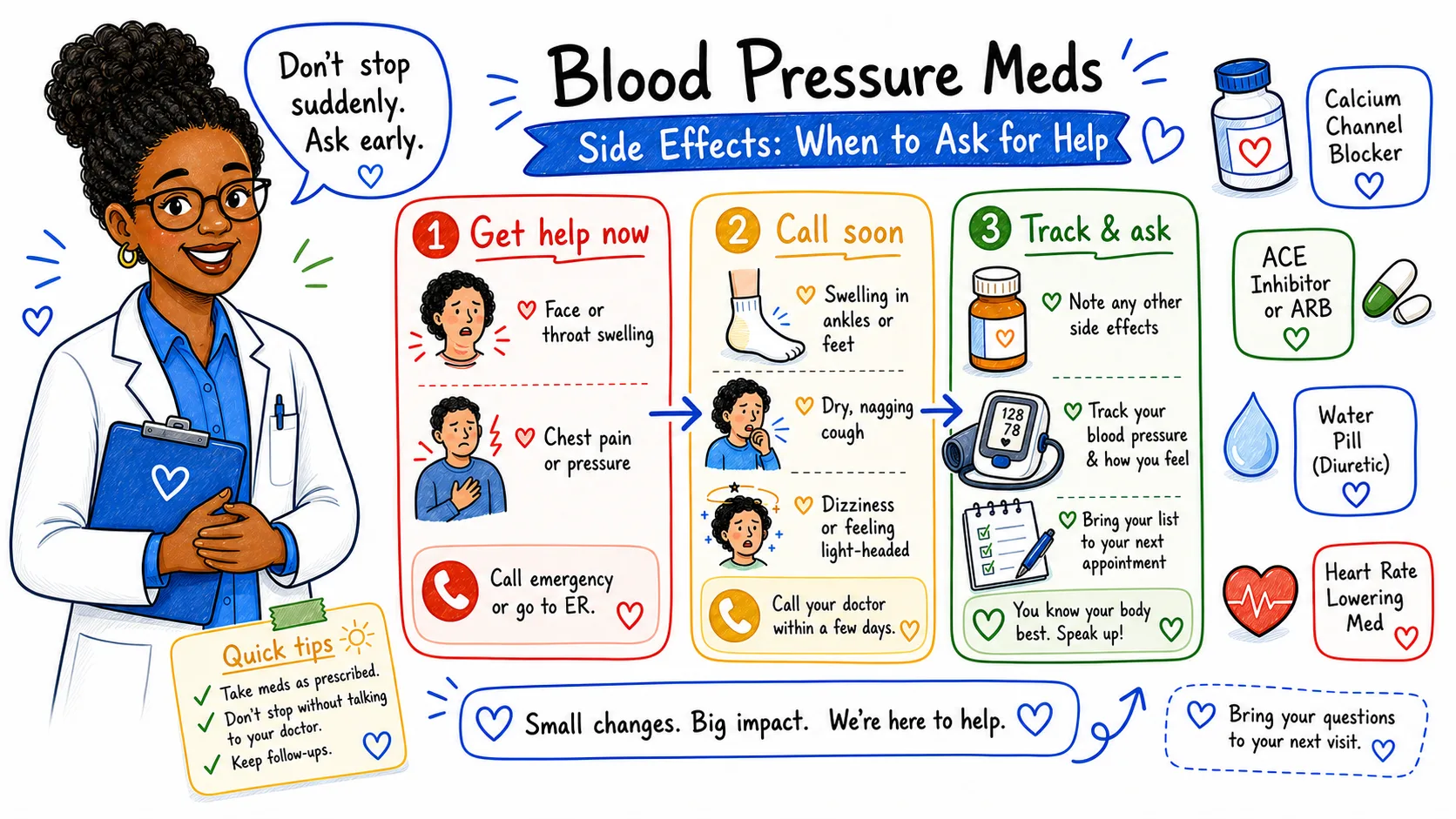
When should a side effect be treated as urgent?
Get medical help immediately if you have any of these symptoms:
- Swelling of the lips, tongue, face, throat, or around the eyes
- Difficulty breathing, wheezing, throat tightness, or trouble swallowing
- Chest pain, chest tightness, or pain spreading to the arm, jaw, back, or shoulder
- Fainting, repeated near-fainting, or severe dizziness with confusion
- Sudden one-sided weakness, facial droop, trouble speaking, severe headache, or vision loss
- A very slow heartbeat with weakness, faintness, or shortness of breath
- Severe vomiting or diarrhoea while taking blood pressure medicines, especially diuretics, ACE inhibitors, or ARBs
- A very high blood pressure reading with symptoms such as chest pain, shortness of breath, confusion, severe headache, or stroke-like signs
Don't take extra tablets to force a high number down. A sudden drop can also be dangerous.
What side effects should you report soon?
Some symptoms aren't usually emergencies, but they shouldn't be ignored for weeks.
Call soon if you notice ankle swelling, a persistent dry cough, dizziness when standing, frequent urination that disrupts daily life, muscle cramps, unusual tiredness, sexual side effects, mood changes, palpitations, or a new symptom that started after a refill or dose change.
If your pharmacy recently gave you a different brand, take a photo of the new pack and the old pack if you still have it. Ask the pharmacist to confirm the active ingredient, strength, tablet type, and directions, especially if the change happened because your usual blood pressure medicine was out of stock.
What should you write down before you ask for advice?
If the symptom is mild and not on the urgent list, keep taking your medicine as prescribed while you contact your care team.
Write down the medicine name, strength, dose, time taken, when the symptom started, recent blood pressure readings, pulse if you know it, missed doses, and any recent brand or pharmacy substitution. A simple blood pressure log your doctor can review is more useful than trying to remember the pattern later.
Also include pregnancy, breastfeeding, fasting, vomiting, diarrhoea, dehydration, supplements, painkillers, cold medicines, diabetes medicines, cholesterol medicines, or hormonal contraception. Those details can change the safest next step.
Which BP medicine side effects should you report?
Blood pressure medicines don't all work the same way, so the side effect pattern often depends on the class of medicine, the dose, and what else you're taking.
This section isn't for diagnosing yourself. It's to help you describe the problem clearly when you speak with your doctor, pharmacist, or Care Specialist.
Calcium channel blockers: amlodipine, nifedipine, diltiazem, verapamil
Calcium channel blockers relax blood vessels so blood can flow with less pressure. In Nigeria, you may know this class through amlodipine or nifedipine.
The side effect you may notice first is ankle or leg swelling. With amlodipine, this swelling is usually caused by how the medicine relaxes small blood vessels. It doesn't always mean your body has too much water, so adding a water pill isn't automatically the fix.
Other possible effects include headache, flushing, dizziness, palpitations, constipation with verapamil, slower heart rate with diltiazem or verapamil, and gum swelling.
Report gradual ankle swelling, especially if it's new or uncomfortable. Seek urgent care if swelling is sudden, affects one leg much more than the other, or comes with chest pain, shortness of breath, or fainting.
ACE inhibitors: lisinopril, enalapril, ramipril, captopril, perindopril
ACE inhibitors relax blood vessels by reducing the effect of hormones that tighten them. They may also be useful for some people with diabetes, kidney disease, heart failure, or a previous heart attack, depending on the doctor's assessment.
The classic side effect is a dry, persistent cough. It can start soon after the medicine begins, or appear weeks or months later. The cough is usually dry and tickly rather than chesty with phlegm.
ACE inhibitors can also raise potassium levels or affect kidney function, which is why doctors may request blood tests after starting or increasing the dose.
The urgent side effect is angioedema: swelling of the lips, tongue, face, throat, or around the eyes. Mouth or throat swelling, hoarseness, breathing difficulty, or trouble swallowing needs emergency care. Don't take another dose while waiting to see what happens.
If an ACE inhibitor causes cough, your doctor may switch you to an ARB such as losartan, valsartan, candesartan, irbesartan, or telmisartan. That switch should be guided by a clinician because your dose, kidney function, potassium level, and other medicines matter.
ACE inhibitors and ARBs are generally avoided in pregnancy. Tell your doctor quickly if you're pregnant, trying to get pregnant, or think you may be pregnant.
ARBs: losartan, valsartan, telmisartan, candesartan, irbesartan, olmesartan
You may tolerate ARBs well. They're often used when an ACE inhibitor causes cough, and may be considered when a renin-angiotensin medicine is needed.
Possible side effects include dizziness, low blood pressure symptoms, high potassium, changes in kidney function, and rare swelling of the face, lips, tongue, or throat.
Potassium and kidney changes may not cause obvious symptoms at first, so blood tests matter when your doctor requests them. Don't combine an ACE inhibitor and an ARB unless a specialist has specifically told you to. Taking lisinopril and losartan together isn't "double protection." It can raise the risk of kidney problems, high potassium, and low blood pressure.
A pharmacy may suggest changing from one active ingredient to another, such as losartan to telmisartan. Treat that as a medicine change. It isn't the same as receiving another brand of the same medicine at the same strength.
Diuretics: hydrochlorothiazide, indapamide, furosemide, spironolactone
Diuretics help the body remove extra salt and water through urine. People often call them water pills, but different diuretics work differently.
The most obvious side effect is passing urine more often. Diuretics are often taken in the morning so you're not waking up at night to urinate, unless your doctor gives a different instruction.
Other possible effects include dizziness, dehydration, low sodium, low potassium with some diuretics, high potassium with potassium-sparing medicines such as spironolactone or amiloride, muscle cramps, weakness, gout flare-ups, kidney strain, and changes in blood sugar in some people.
Don't start potassium supplements, salt substitutes, or electrolyte products because you assume you need them. Some people on diuretics have low potassium; others have high potassium. The safe answer depends on the exact medicine and blood test results.
Vomiting, frequent stooling, heavy sweating, fasting, or being unable to drink fluids can make dizziness and kidney strain more likely. Contact your doctor or pharmacist if any of those are happening while you're taking a diuretic.
Beta-blockers and clonidine
Beta-blockers include atenolol, bisoprolol, metoprolol, carvedilol, nebivolol, propranolol, and labetalol. They slow the heart rate and reduce how hard the heart works.
Possible side effects include tiredness, reduced exercise tolerance, cold hands or feet, dizziness, slow heartbeat, sleep changes, vivid dreams, sexual difficulties, shortness of breath or wheezing in some people, and masking some signs of low blood sugar in people with diabetes.
Be careful with stopping suddenly. Beta-blockers shouldn't be stopped unless a doctor is managing the change, because an abrupt stop can trigger fast heart rate, chest pain, worsening blood pressure, or other heart problems, especially if you already have heart disease.
Clonidine also needs caution. Sudden stopping can cause rebound hypertension, where blood pressure rises sharply. Symptoms can include headache, agitation, tremor, fast heartbeat, anxiety, or chest tightness. Severe cases have been linked to stroke and other serious outcomes.
Missed a beta-blocker or clonidine dose? Don't double up without advice. Check the patient leaflet if you have it, and call your pharmacist or doctor if you're unsure.
What should you ask before changing your BP medicine?
The more specific you are, the easier it is for a clinician or pharmacist to help without guessing.
Bring or send the medicine name, strength, brand, dose timing, start date, symptom pattern, recent readings, pulse if known, missed doses, other medicines, supplements, and any new pharmacy substitution.
If the problem started after a refill, ask the pharmacy:
- Is this the same active ingredient as my prescription?
- Is it the same strength?
- Is it the same tablet type and dosing schedule?
- Is this a plain medicine or a combination tablet?
- Should I take it at the same time as the previous one?
- What side effects should I watch for after this switch?
- Do I need to tell my doctor before starting this?
This matters in Nigerian pharmacies because brand substitutions can be reasonable, but class, strength, and combination changes aren't casual swaps. Amlodipine/valsartan isn't plain amlodipine. Losartan/HCTZ isn't plain losartan. Similar packaging can still mean a different treatment.
If you manage blood pressure medication for a parent or partner remotely, keep photos of the prescription and the current packs. It reduces guessing when someone else is buying the refill.
What you can do safely while waiting for advice
A mild, non-urgent side effect still deserves attention. Keep your routine steady while you wait for clinical advice. Don't cut tablets, skip days, add extra tablets, or borrow someone else's medicine.
You can still reduce avoidable risk:
- Check and record your blood pressure correctly at the same time each day.
- Note when you take the medicine and when the symptom appears.
- Stand up slowly from sitting or lying down.
- Avoid alcohol if the medicine is making you dizzy or sleepy.
- Take diuretics earlier in the day if your doctor or pharmacist agrees.
- Avoid ibuprofen, naproxen, and similar painkillers unless your clinician says they are safe for you.
- Don't add supplements, potassium products, salt substitutes, or herbal mixtures without advice.
Famasi Care Specialists can help with the practical part of this routine: keeping a clear medicine list, checking what changed after a refill, planning recurring refills, and preparing the right questions for your doctor or pharmacist. They don't replace your doctor or prescribe treatment, but support from a Care Specialist can stop small confusion from becoming a 2-week gap.
You shouldn't have to choose between suffering quietly and stopping suddenly. The safer middle path is to document the symptom, keep monitoring your readings, speak to a qualified clinician, and adjust the plan properly.
Summary: What to Take Away From This Guide
- Side effects are common enough to discuss, but they're not a reason to stop blood pressure medication on your own.
- Treat breathing trouble, face or throat swelling, chest pain, fainting, stroke-like symptoms, or severe weakness as urgent.
- Call your doctor or pharmacist soon for ankle swelling, cough, dizziness, frequent urination, sexual side effects, mood changes, or symptoms after a refill change.
- Amlodipine and other calcium channel blockers can cause ankle swelling, flushing, headache, dizziness, constipation, or heart rate changes.
- ACE inhibitors can cause a dry cough; ARBs are less likely to do so but can still affect potassium, kidney function, or blood pressure.
- Diuretics can affect urination, hydration, sodium, potassium, gout, and kidney function.
- Beta-blockers and clonidine shouldn't be stopped suddenly because of rebound or heart-related risks.
- Bring the exact medicine details, symptom pattern, BP readings, missed doses, and recent substitutions when you ask for help.
Common Questions About Blood Pressure Medication Side Effects
Should I stop BP medication if I have side effects?
Which BP medication side effects are urgent?
Can ankle swelling from amlodipine be managed?
What should I tell my pharmacist about a side effect?
Can a new BP medication brand cause new symptoms?
Just for you
References
- American Heart Association. Types of Blood Pressure Medications.
- American Heart Association. Managing High Blood Pressure Medications.
- NICE. Hypertension in adults: diagnosis and management.
- NICE. How do I control my blood pressure? Lifestyle options and choice of medicines — patient decision aid.
- Mayo Clinic. Choosing blood pressure medicines.
- Mayo Clinic. Diuretics.
- Mayo Clinic. Beta blockers.
- DailyMed. Clonidine Hydrochloride Tablets prescribing information.