
One High Blood Pressure Reading? What to Do Before You Panic
A single high blood pressure reading can be scary, but it isn't automatically a diagnosis or an emergency. Here's how to recheck, spot patterns, and know when to get urgent care.
- ✓One high reading is data, not a diagnosis.
- ✓Technique, anxiety, caffeine, posture, and timing can all push a reading up.
- ✓Patterns over several properly taken readings matter more than one number.
- ✓A reading of 180/120 or higher with symptoms needs urgent medical care.
First, check if this high blood pressure reading is an emergency
Not every high reading is an emergency, but some combinations of numbers and symptoms require immediate medical care.
Go to the nearest hospital or emergency department if your reading is 180/120 or higher and you have any of the following symptoms:
- Severe headache
- Chest pain or pressure
- Difficulty breathing
- Vision changes or blurred vision
- Confusion or difficulty speaking
- Numbness or weakness on one side of your body
- Severe anxiety or agitation
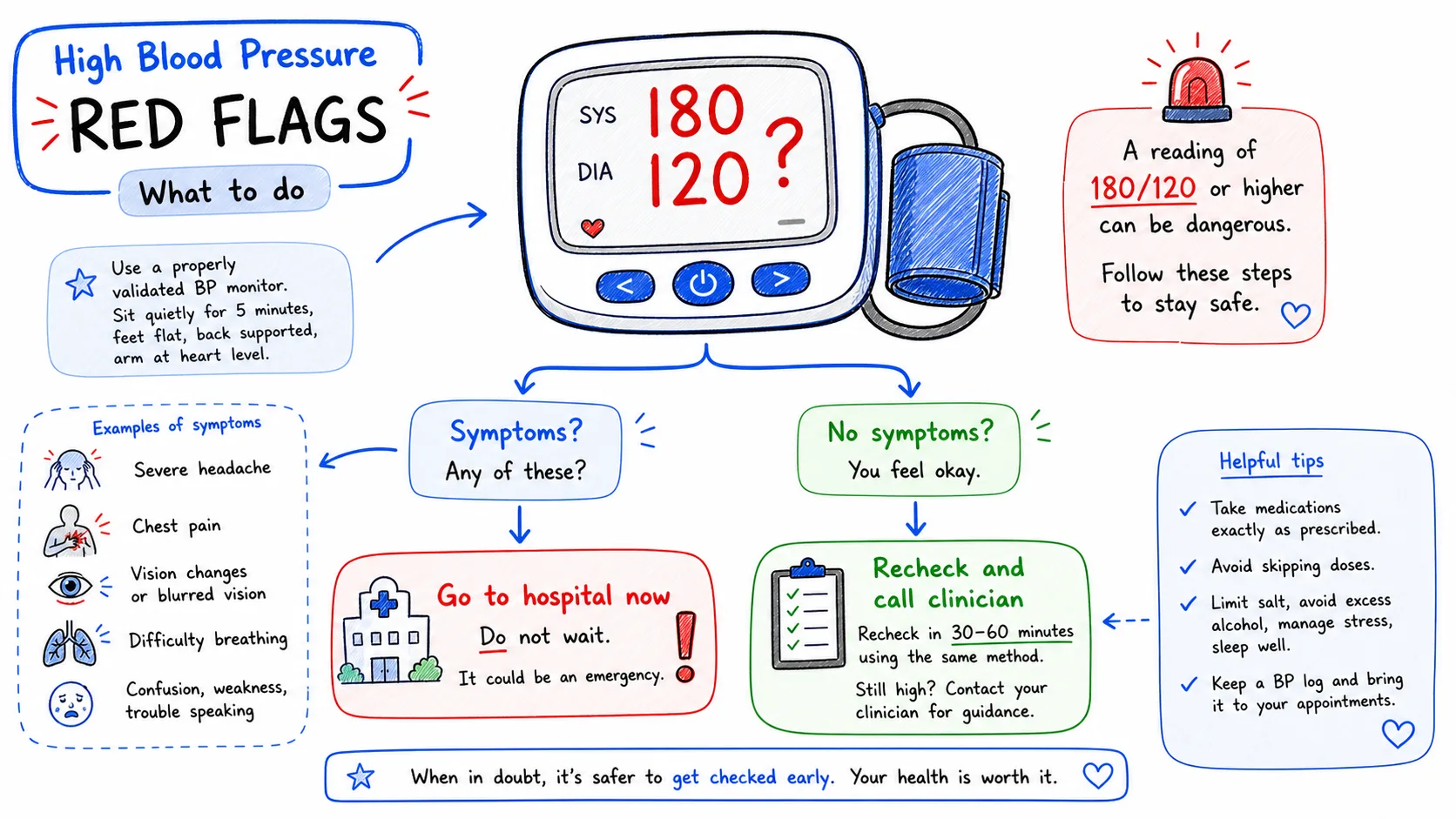
These symptoms, combined with a very high reading, may indicate a hypertensive crisis — a medical emergency that can lead to stroke, heart attack, or organ damage if not treated immediately.
If your reading is 180/120 or higher but you feel completely fine, rest for 5 minutes and check again. If it remains that high, contact your doctor or go to a clinic the same day. Don't ignore it, but don't panic either. The presence of symptoms is what turns a very high reading into an emergency.
If there are no emergency symptoms, recheck properly
Many high readings at home aren't actually high blood pressure; they're measurement errors. A 2017 study in the American Journal of Hypertension found that 69% of home blood pressure devices tested were off by 5 mmHg or more, and simple mistakes in technique can add 10-50 mmHg to a reading.
Do this before you decide what the number means:
- Sit quietly for 5 minutes. No phone, no conversation, no television.
- Keep your feet flat on the floor and your back supported.
- Rest your arm on a table so the cuff is at heart level.
- Put the cuff on bare skin, not over clothing.
- Take 2 more readings, 1-2 minutes apart.
- Average the 2 readings and write that number down.
If the repeat readings are much lower, the first number was probably affected by stress, movement, posture, or technique. For a full guide to home measurement technique, see our article on how to check your blood pressure correctly at home.
Ask yourself these questions & answer honestly
- Did you rest first? Checking immediately after walking, climbing stairs, or feeling stressed will give a falsely high reading.
- Was the cuff on bare skin? A reading taken over clothing can be off by 5-50 mmHg.
- Were your feet flat and your back supported? Crossing your legs can raise your reading by 2-8 mmHg.
- Was your arm supported at heart level? An arm hanging at your side will usually read higher.
- Did you talk during the reading? Even casual conversation can add 5 to 10 mmHg to your systolic number.
- Did you have a full bladder? A full bladder can raise your reading by 10 to 15 mmHg.
- Did you drink coffee or smoke within the last 30 minutes? Both caffeine and nicotine temporarily raise blood pressure.
If the honest answer to any of these is yes, don't treat the first number as the final answer. Fix the condition and recheck.
Anxiety can raise blood pressure and make one high reading look worse
There's a well-documented phenomenon called white-coat hypertension: some people's blood pressure rises simply because they're in a medical setting or thinking about their health. But the same thing happens at home. Researchers call this the alerting reaction: your body releases stress hormones the moment you think about checking your blood pressure, and those hormones can temporarily raise it.
A 2023 study published in Blood Pressure Monitoring found that the first reading in a home session is often 10-20 mmHg higher than subsequent readings taken minutes later, simply because the act of measuring triggers a brief stress response.
The loop is easy to fall into: you check your blood pressure, see a high number, feel anxious, check again while anxious, see another high number, and become more anxious. Some people report home readings spiking to 160/100 or higher during these episodes, then dropping to normal once they calm down.
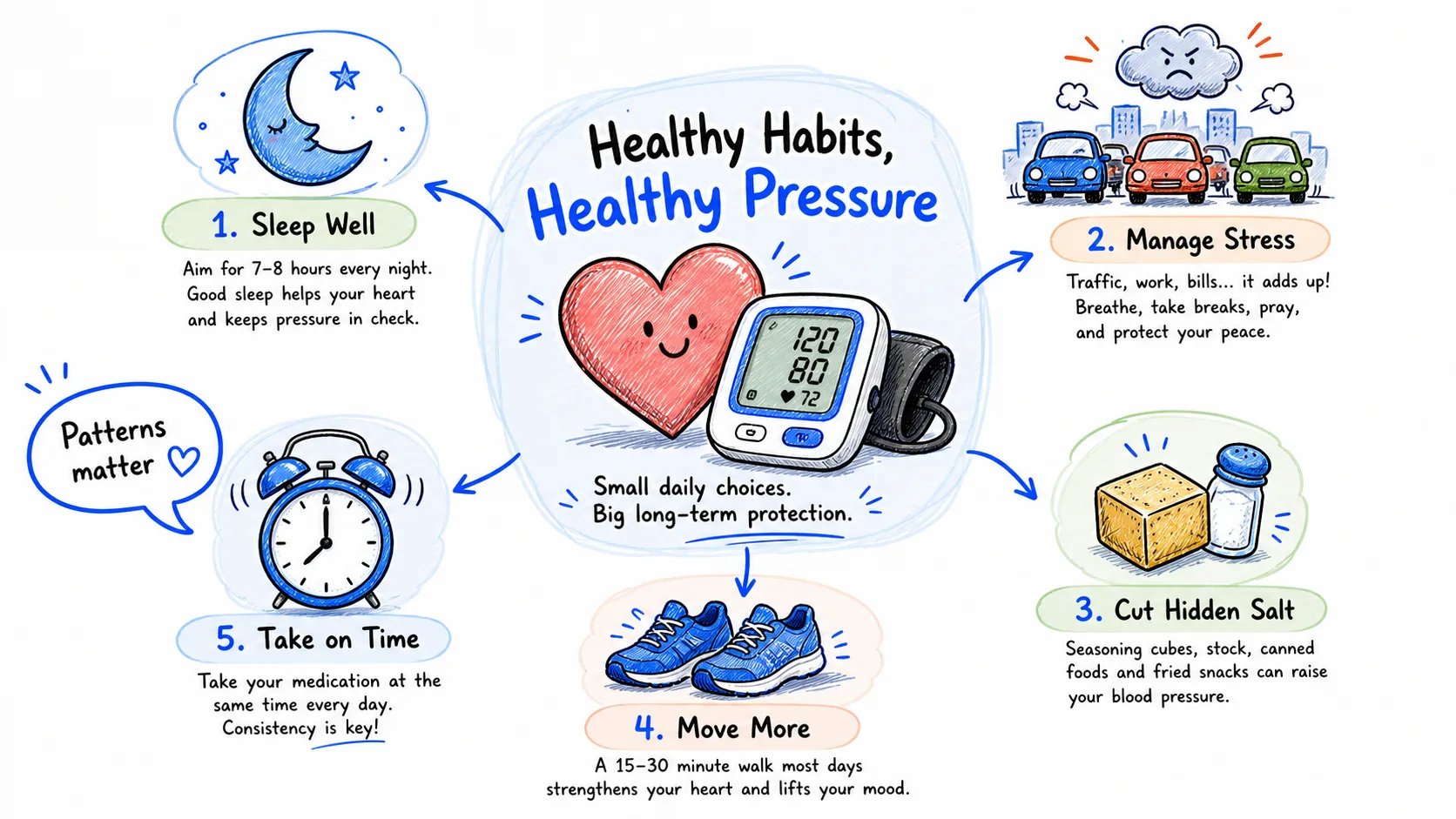
If checking your blood pressure makes you anxious, you don't need to stop checking. You need a calmer routine: check at set times, sit properly, take 2 readings, write them down, and then leave it alone.
How to tell a blood pressure spike from a real pattern
A single high reading is a spike. A pattern of high readings over days or weeks is the signal that something needs attention. The difference matters because spikes happen to everyone, while patterns indicate a trend that your doctor needs to evaluate.
To tell the difference, track three things:
1. Time of day. Blood pressure naturally varies throughout the day. It's typically highest in the morning and lowest in the evening. A reading taken at 7 AM will usually be higher than one taken at 7 PM. If you're comparing readings, compare morning to morning and evening to evening.
2. Context. Note what was happening around the reading. Did you sleep poorly? Were you rushing? Had you just had an argument or stressful phone call? Did you take your medication at the usual time, or was it late? Context turns a single number into useful information.
3. Repetition over time. One reading of 150/95 is a data point. Three readings around 150/95 on 3 different days, taken properly, is a pattern. Patterns are what doctors use to make decisions, not single numbers.
A simple log helps. Write down the date, time, both numbers, which arm you used, and any relevant notes. Bring this log to your next appointment. It gives your doctor more to work with than "my blood pressure was high once."
If you take blood pressure medication, don't change your dose because of one reading
This is one of the most common mistakes people make. They see a high reading and take an extra dose. They see a normal reading and skip a dose. Both are dangerous.
Blood pressure medication is designed to be taken on a schedule that keeps a steady level of the drug in your body. Taking extra medication because of one high reading can make your blood pressure drop too low, leading to dizziness, fainting, or falls. Skipping a dose because of one normal reading interrupts that steady level and can cause rebound hypertension: a sudden, dangerous rise in blood pressure. If you're wondering whether normal readings mean you can stop, read why you shouldn't stop blood pressure medication on your own.
If you're on medication and see an unexpected reading, note it in your log and continue your normal schedule. If readings are consistently higher or lower than your usual range over several days, contact your doctor. They may adjust your dose, add a medication, or investigate whether something else is affecting your numbers.
Never change your medication dose or schedule without speaking to your doctor or pharmacist first.
What to tell your doctor if high readings keep showing up
If the high reading keeps repeating, your doctor needs more than the number. Bring the details that explain what was happening around it.
- The date and time of each reading
- The average of 2 readings, not just the first number
- Whether you had coffee, stress, poor sleep, exercise, or a full bladder before checking
- Whether you missed a dose, took it late, changed brands, or ran out recently
- Any symptoms: headache, chest pain, dizziness, blurred vision, shortness of breath
This helps your doctor see whether the issue is your blood pressure, the measurement, the medication timing, or a refill gap. If running out is part of the problem, fix that separately with a monthly refill routine for blood pressure medication.
Summary: What to Take Away From This Guide
- A single blood pressure reading is information, not a diagnosis. What you do next matters more than the number itself.
- Most surprising readings are caused by measurement error, not a health crisis. Check your technique before reacting.
- The anxiety of checking can raise your blood pressure. Take 2 readings, average them, and don't check obsessively.
- Patterns over days or weeks are what matter, not single spikes. Keep a simple log.
- Never change your medication based on one reading. Continue your normal schedule and contact your doctor if a pattern emerges.
- Seek emergency care only for readings of 180/120 or higher combined with severe symptoms like chest pain, difficulty breathing, or vision changes.
Common Questions About One High Blood Pressure Reading
Should I panic after one high blood pressure reading?
How long should I wait before rechecking a high BP reading?
What BP reading means I should get help now?
Can anxiety make my blood pressure read high?
Should I take extra BP medication after one high reading?
References
- Pickering TG, et al. Call to action on use and reimbursement for home blood pressure monitoring. Hypertension. 2008;52(1):1-9. PubMed. Free PMC version.
- Stergiou GS, et al. Home blood pressure monitoring in the 21st century. Journal of Clinical Hypertension. 2018;20(7):1116-1121. PubMed.
- Odili AN, et al. Characteristics of self-measured home blood pressure in a Nigerian urban community: the NIPREGH study. Blood Pressure Monitoring. 2015;20(5):256-262. PubMed.
- American Heart Association. Home blood pressure monitoring. 2024.
- Nigerian Hypertension Society. Guidelines for the Management of Hypertension in Nigeria. Nigerian Medical Practitioner.
- Iyoha E, et al. Self-monitoring of blood pressure: awareness, practice, perceived barriers and associated sociodemographic factors among adult hypertensives attending a tertiary hospital in South-South Nigeria. International Journal of Clinical and Medical Cardiovascular Advances. 2023.
- Muntner P, et al. Measurement of blood pressure in humans: a scientific statement from the American Heart Association. Hypertension. 2019;73(5):e35-e66. Free PMC version.
- Myers MG. The great myth of office blood pressure measurement. Journal of Hypertension. 2012;30(10):1894-1898. LWW.